Before the Internet, gathering information for students was a laborious task as they had to go through endless resources, books, reports, papers, and much more. This surely consumed a lot of time, and it became frequently difficult to get material that was both relevant and current. Thanks to its rapid advancements, researching is much quicker and simpler – particularly helpful for students doing homework and research. This article focuses on the good and bad effects of the Internet to students.
The Internet has numerous benefits, such as making research easier, encouraging collaboration, and offering access to online learning platforms. The Internet makes it easy for students to collaborate across borders. For instance, students from remote or rural locations who were once unable to attend universities can now take courses and achieve qualifications from universities in other countries. But it can also become a source of distraction or addiction if used excessively or inappropriately.
One of the major bad effects of the Internet on students is its potential to hinder their creativity. Students can go down a perilous path of distraction from everything vital, including study or work duties, when they become so engrossed in Internet browsing that they ignore eating and sleeping appropriately, their studies, or their jobs.
Internet technology enables students to connect with classmates and teachers from around the globe, enabling them to discuss study material and clarify any queries, expanding knowledge while encouraging new thoughts and perspectives. In addition, accessing professional opportunities that match career aspirations has never been easier! If you live in Gujarat and are looking for the best school in Baroda for your child, consider the academic programs offered, the extracurricular activities available, and how the school handles its children’s exposure to technology.
5 Positive Effects of Technology on Children’s Development
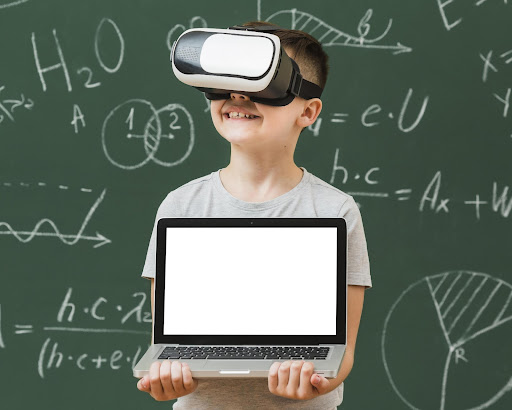
The positive effects of technology on students’ lives are endless. Technology can play an invaluable role in supporting children to expand their creativity and imagination, whether through digital art tools, music production software, or coding platforms. Communication through video calls and social media helps children develop skills they will need in their future careers. Below discussed are the top 5 positive effects of technology on children’s growth and development:
1. Technology Makes Future Technological Leaders
Kids with advanced technology skills have an enormous edge when it comes to landing high-paying tech-related jobs. Our economy relies heavily on tech, so being technologically proficient from an early age is invaluable. Children who use technology can often form lasting bonds through shared interests. Whether that means socializing through video chat during online sessions or expanding their passion for coding by attending coding camps and classes with like-minded peers – children who utilize technology can form meaningful friendships through these connections.
As they pursue their tech-related goals, the difficulties that arise help develop perseverance in children. Achieving goals like getting to the next level in video games or completing assignments on computer programs teaches kids how to overcome roadblocks and remain focused on reaching their desired goal, teaching invaluable life lessons they can apply elsewhere in their lives.
2. Helps Improve IQ
Studies are increasingly finding a correlation between their digital engagement and how it affects them positively across different domains, such as brain development, cognitive skills acquisition, and social-emotional development. Knowing and understanding how technology plays an invaluable role in developing children’s problem-solving and spatial skills through computer games, creative apps, and educational portals is important. This proves to be highly useful in both – school learning environments and the workforce.
A noteworthy impact of technology on children is that it enhances their overall IQ by improving their brain development, cognitive skills acquisition, and social-emotional learning development. It also facilitates higher intelligence levels as it fosters essential skills for survival in the world outside the class.
3. Children are Becoming Creative
Technology provides children with an outlet to express their creativity. Enhanced creativity without any boundaries is one of the major positive effects of technology on kids. Through digital art, music, and videos, they can share them with family and friends to boost self-expression and build self-confidence.
Technology encourages children to think more critically. For instance, working on projects often requires them to think quickly and creatively to complete a task, which becomes efficient with the right and guided Internet use.
When it comes to creativity, technology plays a vital role as it provides children with another key benefit – research. It allows them to explore topics independently, which enables them to uncover more information about subjects that interest them, whether for school or recreational projects. It also introduces children to different cultures and perspectives they wouldn’t normally discover otherwise.
4. Making Kids Independent and Responsible
Technology gives children an interactive way to learn through games and activities while developing independence in how they use it and navigate its interfaces without assistance – an essential skill in an ever-evolving digital landscape. The proper use of technology helps teachers and parents cultivate a sense of independence in students. This also makes them more responsible in every aspect of their lives.
Parents and teachers from an internationally acclaimed and the best school in Baroda are already helping kids find more positive ways to use technology to lead a balanced lifestyle. Such habits will protect children from overusing technology while providing valuable skills necessary for lifelong success – for instance, using the Internet ethically and in a proper way makes them more responsible and reliable.
5. Making Kids Problem Solvers and Decision Makers
Though modern technology may pose threats, it also offers opportunities for child development when used properly. Through it, kids can learn, engage with their world, and expand their imagination.
Playing video games that involve hand and finger movements helps build their motor skills while reading e-books on tablets or computers can hone literacy and language abilities. Also, exploring the Internet to research topics may foster their reasoning and problem-solving capabilities. Kids using the Internet also benefit from the opportunities to cultivate open-mindedness towards different perspectives.
Children who want to know about something can quickly search for it online and find their answers. This has replaced old-fashioned tutoring sessions and can help children learn math, science, languages, and other subjects faster. This shows the impact of technology on children is not necessarily negative; it can also have a positive effect when managed appropriately.
5 Negative Effects of Technology on Children’s Development

Children’s lives have been profoundly impacted by technology. Providing access to online informational resources, encouraging creativity, and enhancing problem-solving skills can improve learning experiences. Yet excessive or inappropriate technology use may have detrimental effects on children’s development, including reduced physical activity, sleep issues, and cyberbullying. Below discussed are the top 5 negative effects of technology on children’s growth and development:
1. It Affects the Studies
Many children have been reported as spending less time playing outside and more time engaging in social media and video game playback, which can create issues in terms of both studies and physical health. It can also contribute to a lack of sleep due to blue light from screens interfering with the production of melatonin that regulates sleeping cycles. This affects their overall performance in their school in terms of academics and other curricular activities. Students may also struggle with face-to-face interactions, leading to emotional intelligence and social skills development issues.
Additionally, because they are mostly diverted by gaming and other mobile phone usage, they can have problems understanding what they are taught in class. Further, they could struggle to comprehend and adjust to the nonverbal cues given by others, which might put them at odds with friends and family. Reducing screen time may help develop these abilities further.
2. Results in Addiction and No Social Gatherings
Depending upon the frequency and duration of their tech use, children’s tech use could lead to addiction and interfere with their social skills. Spending too much time playing video games and social media may hinder interactions with real people and understanding social rules. They could face some challenges in concentrating on some of the tasks, which may have cultivated the short-span issue, making them moody or irritable. One of the bad effects of the Internet on students needs to be addressed effectively.
Children who become addicted to technology risk majorly affecting their personal and academic lives. This may also include reduced physical activity levels. They may become depressed and suffer anxiety as a result. Therefore, parents can limit children’s technology usage to encourage them to pursue other activities.
3. Making Children Frustrated and Depressed
Excessive technology use can contribute to the increase in frustration and depression in students. This also results in decreased physical activity, sleep disruption, and social isolation. It may also hinder empathy development and limit face-to-face communication and community-building opportunities. Kids engaging with technology uncontrollably and without guidance from their parents or teachers may become more depressed and frustrated. To learn more about the right technology usage for kids, connect with the best school in Baroda for your kids now!
Another negative impact of technology on children is shortened attention spans among children and teenagers. They quickly adapt to receiving instantaneous responses and gratification, which has an adverse effect on their focus and concentration skills, leading to emotional reactivity, such as acting impulsively without thinking – potentially leading to depression, stress, or lower self-esteem.
4. Short Memory and Focus Span
Technology has reduced students’ learning memory capacity, diminishing their ability to stay focused on tasks that require concentration and attention. For instance, keeping track of multiple information sources while listening to lectures or reading articles may become challenging – this may have an adverse impact on student grades. By using it mindfully, parents should find an equilibrium between the positive and negative aspects of technology’s influence on child development. The more they use the technology, the shorter their memory and focus span.
Even though technology offers many benefits to children, its overuse can negatively affect them. One issue is its potential to diminish memory and focused social interaction between peers; over time, this could also reduce problem-solving skills among them. Learn more about the best schools in Baroda and how their faculties are teaching them the right way,
5. Obesity
Technology contributes to childhood obesity by encouraging sedentary behaviors and decreasing physical activity, encouraging snacking outside meal times, and leading to unhealthy food choices – advertising on video games and social media promotes the consumption of high-calorie food and beverages. Technology usage can also disrupt sleep, which is essential to good health. Lack of restful nights’ rest can decrease memory retention, impair learning ability, lead to weight gain, and negatively affect mood, heart health, and attention span.
Children may internalize sexualization messages from online games and experience negative body self-image. Furthermore, excessive screen time may disrupt neural systems, affecting frontal lobe development – the area responsible for suppressing inappropriate impulses. Therefore, parents and educators must limit children’s technology usage while encouraging healthy activities.
Conclusion
Students can use the Internet as a powerful learning resource in various ways to enhance their educational experience. They can find online education, connect with classmates and teachers, stay current on recent trends in their field of study, and research topics for assignments or projects using it responsibly – however, it can also become a source of distraction, leading to procrastination or poor time management; therefore they must use it appropriately and avoid its harmful side-effects.
Using technology helps develop children’s visual-spatial abilities necessary for map reading and solving puzzles – improving problem-solving ability as an essential aspect of education and future careers. However, understanding the good and bad effects of Internet to students is crucial while educating them about the technology, the Internet, and the web world.
So, if you ask the question, is digital technology making children’s lives better or not? It is definitely yes. To learn more, consult the best school in Baroda for your kids’ successful and meaningful future.
About the Author